Top 8 Digital Tools for Farm Record Keeping
Farmers face increasing challenges in managing their operations, from regulatory compliance to financial tracking. Traditional methods like paper records and spreadsheets are no longer sufficient. Digital tools streamline farm data management, enabling farmers to track expenses, monitor crop performance, and simplify reporting. Here's a quick overview of eight digital tools for farm record-keeping:
- HarvestYield: Offers GPS job tracking, weather data integration, and team scheduling. Accessible across iOS, Android, and web platforms.
- Farmbrite: Centralizes farm data with a web-based platform, ideal for diverse farming operations.
- Tend: Lacks detailed documentation, making its features and usability unclear.
- FarmKeep: Limited information on its functionality and platform compatibility.
- FarmRaise: Focuses on financial management but lacks clarity on platform access and compliance.
- Ambrook: Specializes in expense tracking but provides limited features beyond financial data.
- EasyFarm: Offers tools for crop and livestock tracking but lacks detailed feature descriptions.
- Traction: Strong in budgeting and expense tracking but not a full farm management solution.
Quick Comparison
Tool Name
Primary Focus
Platform Availability
Key Features
HarvestYield
iOS, Android, Web
GPS tracking, weather data, scheduling
Farmbrite
All-in-one management
Web-based
Data centralization, compliance
Tend
Operational management
Not specified
Limited documentation
FarmKeep
Data management
Not specified
Unclear capabilities
FarmRaise
Financial management
Not specified
Crop tracking, input management
Ambrook
Expense tracking
Not specified
Financial focus
EasyFarm
Simple record keeping
Not specified
Crop/livestock tracking
Traction
Budgeting and expenses
Not specified
Financial reporting
Digital tools transform farm data into actionable insights, helping farmers save time, reduce errors, and make informed decisions. Choose a tool that aligns with your farm's specific needs and priorities.
📊 On-Farm Recordkeeping Strategies | Tools for Compliance & Business Success
1. HarvestYield
HarvestYield is a standout solution for simplifying farm record keeping. Designed for contractors, managers, and small farm owners, this platform tackles the daily challenges of agricultural workflows with precision.
Simplified Record Keeping and Data Management
Say goodbye to paper job sheets - HarvestYield digitizes the entire process. It automatically logs GPS job tracking and weather data, while also keeping tabs on machine costs and customer records. Field mapping tools help maintain accurate acreage records, ensuring nothing is left to guesswork.
The platform also automates job scheduling, making it easier for team members to share and access updated information.
Easy Access Across Devices
HarvestYield works seamlessly across iOS, Android, and web platforms. Whether you're using a smartphone, tablet, or computer, your records are just a tap away. Thanks to cloud storage, any updates made in the field are instantly reflected back at the office.
Tailored Features for U.S. Farms
For U.S.-based operations, HarvestYield simplifies billing by allowing direct invoicing from digital job sheets. This feature aligns perfectly with U.S. accounting practices.
The platform prices by active acreage: a free tier for solo operators up to 50 acres, then Starter, Pro, and Business for larger operations. Paid plans come with added technical support and unlimited team members, ensuring smooth operations at every level.
2. Farmbrite
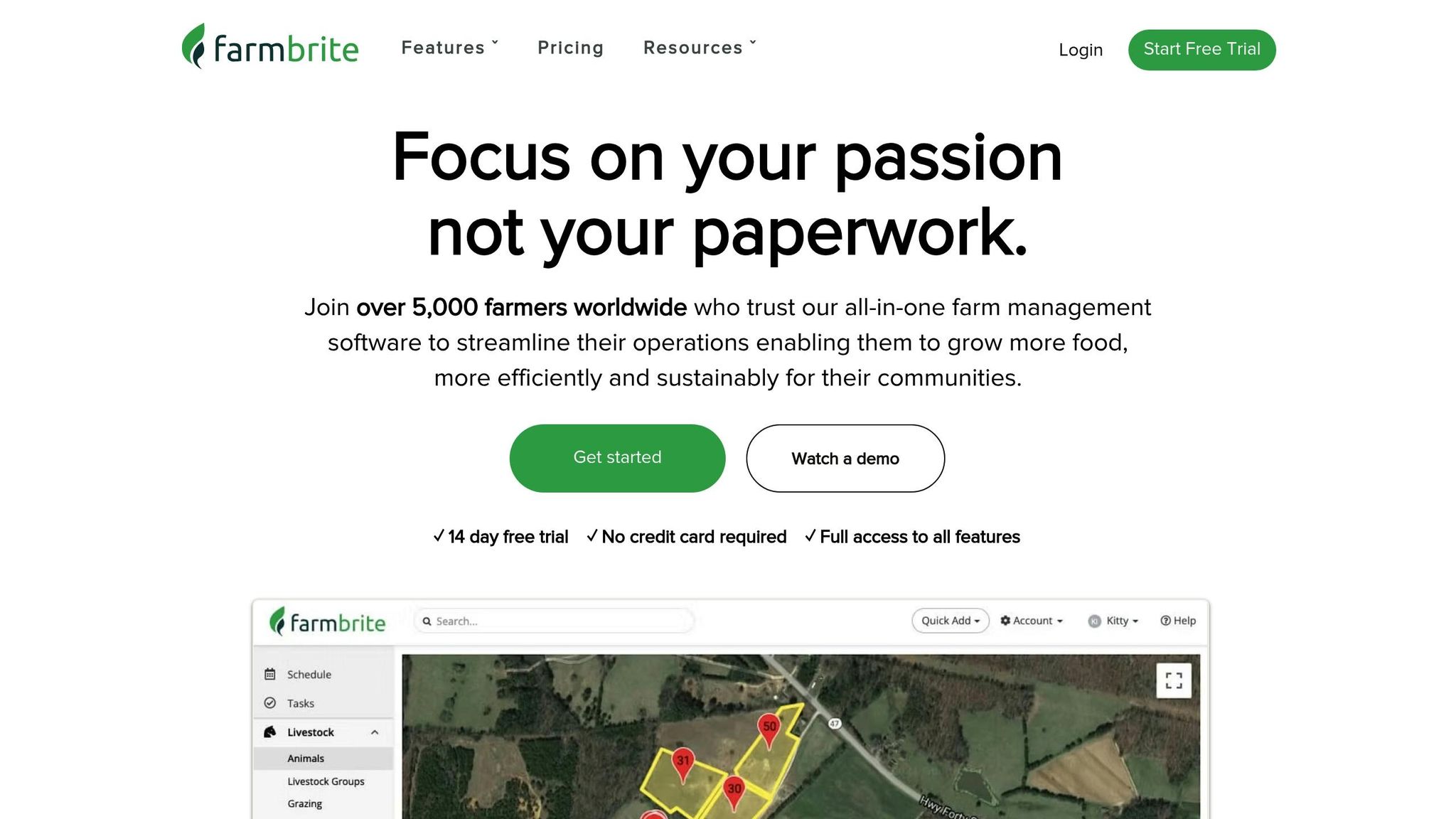
Farmbrite is an online tool designed to help farmers manage their records efficiently. With its web-based platform, it allows users to centralize all their farm data and access it easily from any device with an internet connection. Its straightforward interface makes organizing and tracking farm information a hassle-free experience.
3. Tend
Tend's public documentation is notably sparse, making it difficult to fully understand its capabilities. The lack of detailed information about its features, integrations, and U.S.-specific functionalities leaves its overall value unclear compared to other tools with more comprehensive documentation.
Record Keeping and Data Management Capabilities
There’s no available information outlining Tend’s approach to data management, user interface design, or compatibility with other farm management systems. This lack of transparency makes it hard to assess whether Tend can address specific operational requirements effectively.
Platform Availability
Farmers often rely on tools that work seamlessly across devices like desktops, mobile phones, and tablets. However, Tend does not specify whether its platform is accessible via web, mobile, or desktop, creating uncertainty about its usability and adaptability.
Specialized Features for U.S. Farms
It’s unclear whether Tend supports features tailored to U.S. farms, such as imperial measurements, USD formatting, or compliance with USDA standards. This omission makes it harder to determine its suitability for American farmers.
When choosing a farm management tool, having clear and detailed information about features, pricing, and support is essential. Without transparency, it becomes challenging to evaluate whether a tool like Tend can meet both immediate needs and future growth expectations.
4. FarmKeep
FarmKeep falls short in providing sufficient details about its record-keeping features, leaving questions about its ability to meet the demands of today’s farms. Below are the key areas where documentation is lacking:
Record Keeping and Data Management Capabilities
FarmKeep's documentation does not clarify how it handles essential tasks like crop tracking, input records, financial management, or harvest logs. There's also no mention of features like data import/export, reporting tools, or integrations with other systems - critical elements for efficient farm management.
Platform Availability
It’s unclear whether FarmKeep is accessible across mobile, web, or desktop platforms. For farmers who need to manage operations both in the field and at the office, this lack of information raises concerns about its practicality and ease of use.
Tailoring for U.S. Farms
FarmKeep provides no indication that it supports U.S.-specific needs, such as imperial measurement units or compliance with local regulations. This absence of detail makes it difficult to assess its suitability for American farms.
5. FarmRaise
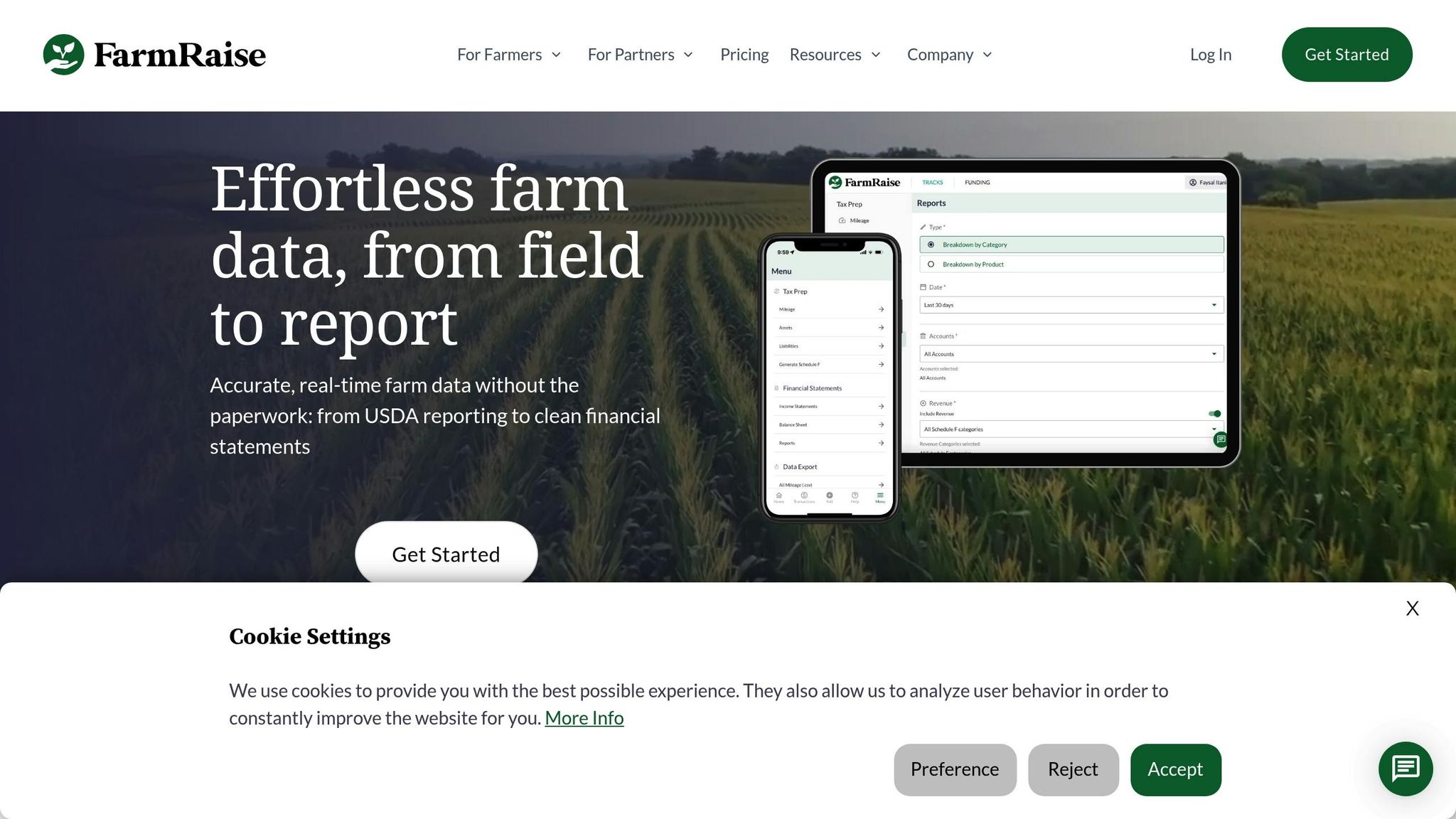
FarmRaise, like other tools we've discussed, emphasizes the importance of accurate data management. However, some aspects of its functionality remain vague. Let’s break down its features and what you might need to clarify.
Record Keeping and Data Management Capabilities
FarmRaise offers some tools for crop production tracking, input management, and harvest documentation, but the specifics are sparse. For instance, details about how data is stored, backed up, or exported are not fully outlined. This information is crucial for ensuring long-term record-keeping and meeting the needs of accountants, lenders, or regulatory bodies. If you're considering this platform, it’s worth digging deeper into how it handles these processes.
Platform Availability
Another point that needs clarification is how you can access the platform. Is FarmRaise available as a web app, a mobile app, or even a desktop application? Knowing this is important, especially if you plan to update records directly from the field in real time.
Specialized Features for U.S. Farms
For farmers in the U.S., it’s important to confirm whether FarmRaise aligns with domestic standards. Does it use imperial units like acres, pounds, and gallons? Is its currency formatted in USD? Additionally, does it help ensure compliance with U.S. agricultural regulations? These are critical factors to verify to ensure the platform meets the specific needs of American farms.
Transform Your Agricultural Team
Streamline job management, field mapping, and machine tracking with HarvestYield. Simplify your operations and eliminate paper job sheets.
Continue6. Ambrook
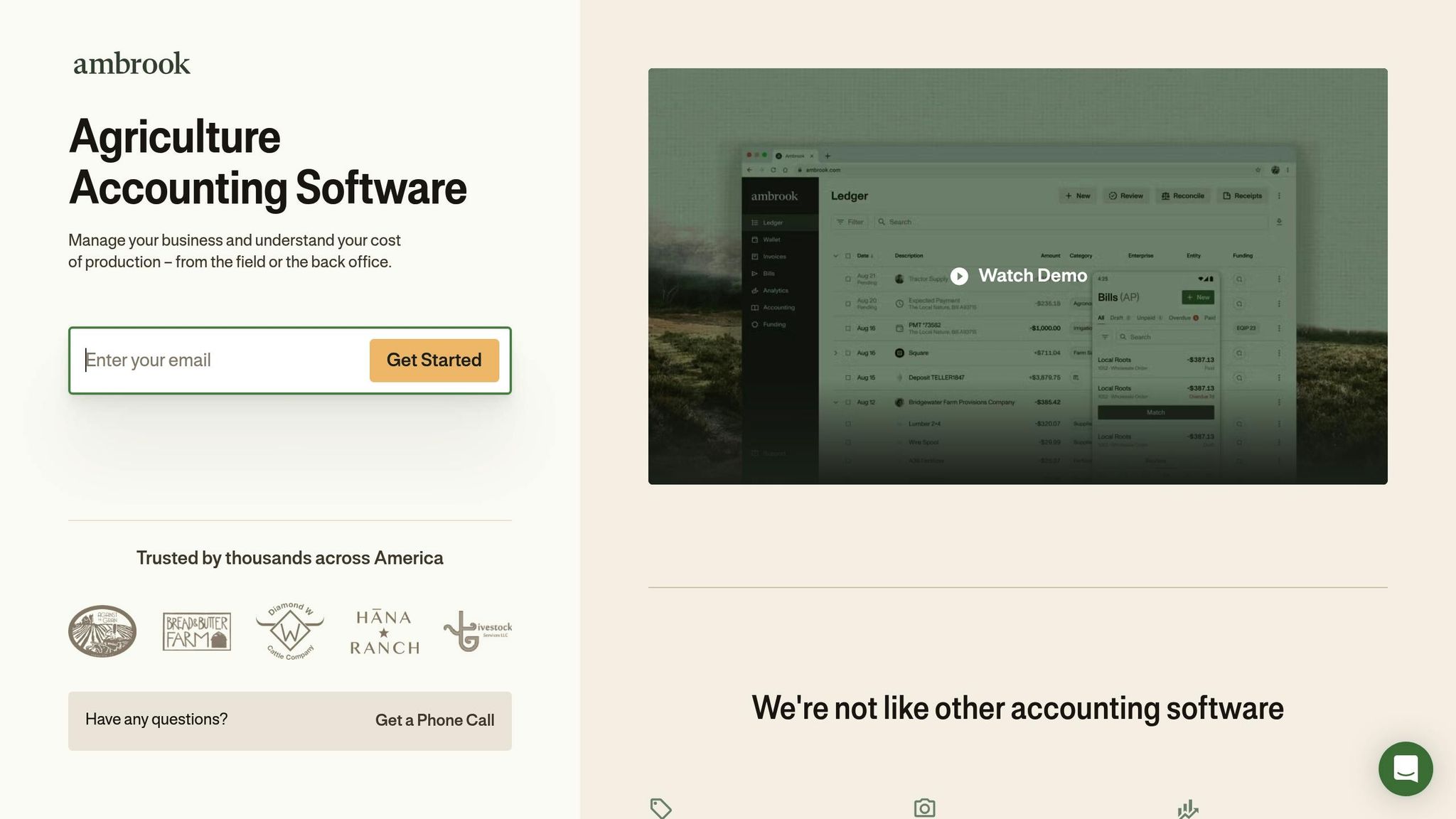
When it comes to digital record-keeping, Ambrook zeroes in on financial data, with a particular emphasis on tracking expenses. This farm accounting software is designed to simplify financial management, but it doesn't provide much information about additional record-keeping features beyond expenses.
Record Keeping and Data Management Capabilities
Ambrook’s primary focus is on financial management, specifically expense tracking. If you're looking for a tool with broader record-keeping functionalities, it’s worth checking whether Ambrook offers features beyond financial data.
Compliance with U.S. Farming Regulations
While Ambrook might assist with basic financial record-keeping requirements, there’s no available information confirming its compliance with broader U.S. farming regulations. Farmers should investigate further to ensure it meets their regulatory needs.
Specialized Features for U.S. Farms
Details about Ambrook’s support for localization features, like imperial units or USD formatting, remain unclear. If these features are essential to your operation, it’s a good idea to verify their availability before committing to the platform.
For a more comprehensive solution, take a look at EasyFarm, which offers additional tools for record-keeping and farm management.
7. EasyFarm
EasyFarm is a farm management tool designed to assist with record keeping, though details about its exact features are somewhat vague. Here's a breakdown of what’s known - and what isn’t - about this platform.
Record Keeping and Data Management Features
While EasyFarm is said to provide tools for tasks like crop monitoring, livestock tracking, and input management, the specifics of these features are not clearly outlined. It's unclear how comprehensive or user-friendly these tools are.
Platform Compatibility
The platform’s availability across devices - whether web-based, mobile, or desktop - is not specified. If you have a preferred device or operating system, it’s best to confirm compatibility beforehand.
U.S. Farming Standards
It’s uncertain whether EasyFarm supports U.S.-specific requirements, such as the use of imperial units or currency formatting in USD. Farmers in the U.S. should verify these details directly with the provider to ensure the platform aligns with local needs.
If you're considering EasyFarm, reach out to the provider to clarify these points and confirm whether it suits your farm's specific requirements.
8. Traction
Traction is a tool designed to help with budgeting, expense tracking, and financial reporting. While it excels in record-keeping for these purposes, it doesn’t offer a full suite of operational tools for farm management[7].
Record Keeping and Data Management Capabilities
Traction’s strength lies in its ability to manage financial records effectively. However, it doesn’t provide the tools needed for comprehensive farm operation management.
Compliance with U.S. Farming Regulations
There’s no publicly available information confirming whether Traction aligns with USDA guidelines or meets Schedule F requirements. It’s a good idea to reach out to the provider directly to confirm compliance with these regulations.
Platform Availability
The documentation doesn’t clarify whether Traction can be accessed through web browsers, mobile apps, or desktop software. Before committing, check with the provider to confirm which platforms are supported.
Traction’s focus on financial management makes it a specialized option worth considering, especially when compared to other tools with broader operational features discussed later.
Feature Comparison Table
Making the right choice often comes down to comparing key features side by side. The table below outlines the primary functions, platform availability, compliance features, pricing models, and standout strengths of various tools, helping you find the best fit for your farm's needs.
Tool Name
Primary Function
Platform Availability
Compliance Features
Pricing Model
Main Strengths
HarvestYield
Job management platform for agricultural teams
iOS, Android, web
GPS-based job tracking, weather data integration
Free, Starter, Pro, and Business plans (priced by acreage)
Team scheduling, seamless data transfer, multi-platform support
Farmbrite
All-in-one farm management for diverse farms
Web-based, accessible from any device
Organic certifications, compliance reporting
14-day free trial, then subscription
Comprehensive reporting, strong customer service, built by farmers
Tend
Farm management with a focus on operational efficiency
Not specified
Not specified
Not specified
Operational management tools
FarmKeep
Record keeping and farm data management
Not specified
Not specified
Not specified
Data organization and storage
FarmRaise
Farm financial management and funding assistance
Not specified
Not specified
Not specified
Financial planning and funding support
Ambrook
Financial management for farms
Not specified
Not specified
Not specified
Accounting and financial reporting
EasyFarm
Simple farm record-keeping solution
Not specified
Not specified
Not specified
User-friendly interface
Traction
Budgeting and expense tracking
Not specified
Not specified
Not specified
Financial record management
This overview highlights how each tool caters to specific farming needs, from financial planning to operational management. For instance, HarvestYield excels in team coordination, offering GPS-based tracking and weather integration, while Farmbrite provides an all-encompassing solution tailored to biodiverse and multi-species farms.
Farmbrite also shines in compliance reporting, particularly for organic certifications. Jack R., a farm owner-operator, shared his experience with Farmbrite:
"Farmbrite has allowed me to track bottlenecks in time allocation, resulting in a 15% reduction in the labor time I need to allocate daily, allowing for additional time for livestock observation and interaction."
Tools like HarvestYield and Farmbrite stand out for their multi-platform support, making them accessible both in the field and in the office. However, many other tools lack detailed information on platform availability and compliance features, which could be a deciding factor for some users.
Pricing transparency also varies. Farmbrite offers a clear 14-day free trial, allowing users to explore all features before committing. On the other hand, several tools require direct inquiries for pricing details, which might complicate the decision-making process.
When choosing the right tool, it’s essential to align it with your farm's unique needs. For team-focused operations, HarvestYield's scheduling features might be invaluable. Meanwhile, farms with diverse or complex operations could benefit more from Farmbrite's comprehensive approach. As Jack R.’s experience illustrates, these tools can deliver measurable results, such as reducing labor time and improving overall efficiency.
Conclusion
Digital tools have the power to reshape how you manage your agricultural operations by streamlining data and improving decision-making. The key takeaway? Match the specific challenges of your farm - whether it’s team coordination, compliance reporting, or something else - with a tool designed to tackle those needs effectively.
Look for tools that provide easy access across devices, especially during peak seasons when staying updated in real time can be the difference between smooth operations and unnecessary setbacks. Keeping your data current and accessible is a game-changer when time is of the essence.
Budget considerations are equally important. Evaluate the cost of the tool alongside its potential to boost efficiency and productivity. Trial periods can be a great way to ensure you’re getting value for your investment before committing long-term.
Ultimately, focus on features that directly address your farm's priorities. The right digital solution doesn’t just replace paper records - it simplifies processes, improves decision-making, and helps centralize data to meet the demands of modern agriculture.
FAQs
What should I look for in a digital tool to manage farm records effectively?
When choosing a digital tool for farm record-keeping, prioritize ease of use, practical features, and how well it aligns with your specific farming needs. The ideal tool should streamline the process of tracking operations, inputs, and outputs while addressing common issues like maintaining accurate data and staying organized.
Make sure the tool works seamlessly with your existing systems, provides mobile access for on-the-go convenience, and supports U.S. measurement units and formats - like acres, gallons, and Fahrenheit. Opting for a tool designed for your farm's size and type of operations can cut down on paperwork, boost efficiency, and make managing farm records a lot simpler.
How do digital tools make farm management easier compared to using paper records or spreadsheets?
Digital tools make managing a farm much easier by automating tasks, improving precision, and keeping your records safe. Instead of relying on paper logs or spreadsheets, these systems handle repetitive chores like data entry for you, cutting down on mistakes and saving valuable time. Plus, with access through a smartphone, tablet, or computer, you can update and review your records from virtually anywhere.
Another big advantage is secure storage. Digital tools use encryption and regular backups to safeguard your data from loss or damage. This means your farm’s operational history is always protected and easy to retrieve, giving you the confidence to make well-informed decisions without the hassle of manual record-keeping.
What features should I prioritize in a farm management tool for use in the U.S.?
When choosing a farm management tool in the U.S., it's important to focus on features tailored to local requirements. For instance, tools with mobile access allow you to make updates on the go, while offline capabilities are essential for farms in areas with spotty internet. It's also helpful if the tool can easily integrate with other software you’re already using.
Another key consideration is data security - make sure the tool safeguards sensitive farm data and meets U.S. regulatory standards. To improve usability, look for options that offer customizable reports and support for imperial units like acres and pounds, ensuring accuracy and ease for daily operations.