How Farm Teams Use Activity Analytics
Farm teams are using activity analytics to improve efficiency and reduce errors. By digitally tracking tasks, GPS locations, and team performance, managers can make faster decisions and optimize operations. Tools like HarvestYield simplify this process by automating data collection, scheduling, and job monitoring. Key benefits include:
- 17% productivity gains and 41% lower absenteeism with activity tracking.
- Real-time GPS tracking reduces downtime and errors.
- Maintenance alerts based on machine usage prevent costly breakdowns.
- Automated dashboards save hours in coordination and reporting.
For example, New Zealand’s Mr Apple saved 110,000 working hours in four years by using labor tracking analytics. By focusing on data-driven decisions, farms can cut costs, balance workloads, and improve overall performance.
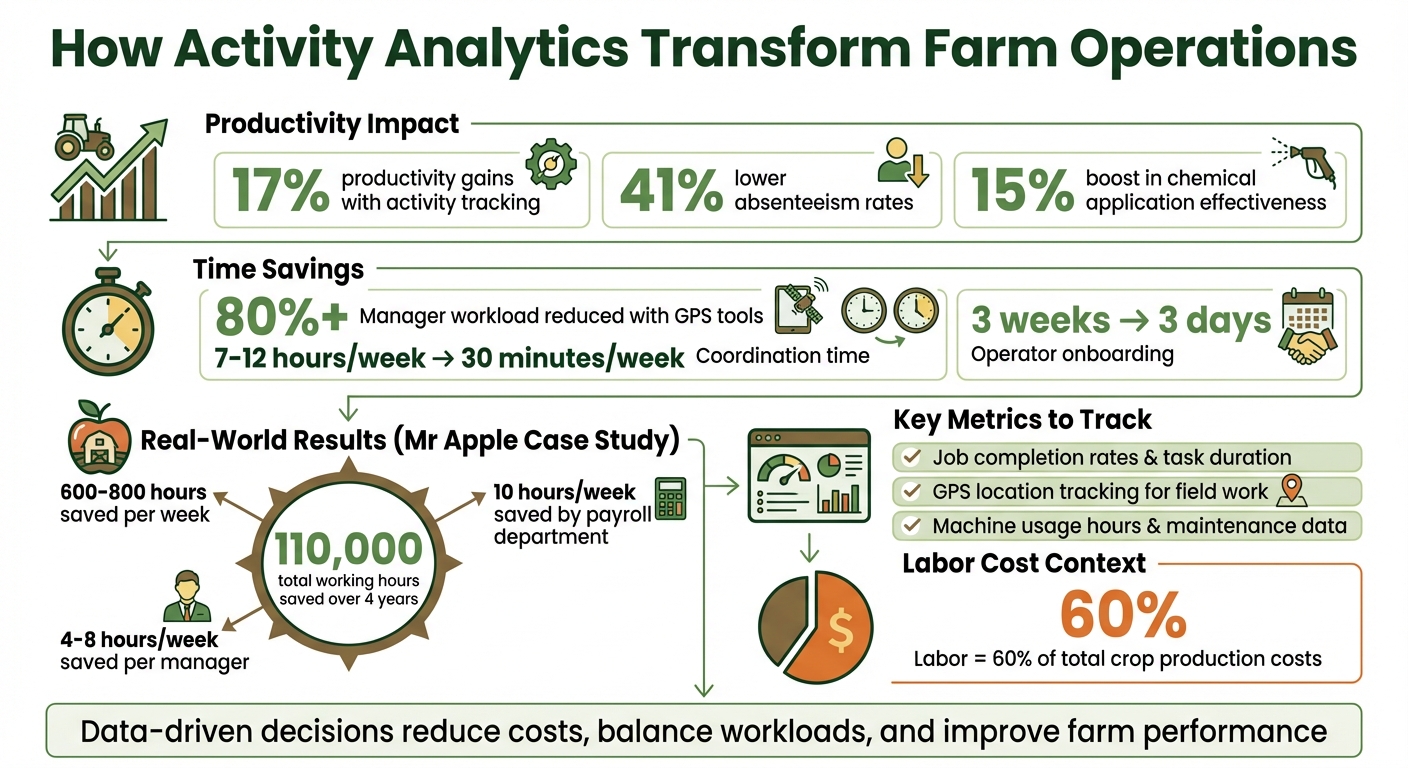
Farm Activity Analytics: Key Benefits and Impact Statistics
Connecting the Dots: Getting Farm Data to work for you
Explore our library of farm management videos to see these analytics in action.
Transform Your Agricultural Team
Streamline job management, field mapping, and machine tracking with HarvestYield. Simplify your operations and eliminate paper job sheets.
ContinueKey Metrics to Track for Farm Team Activity
Metrics are the bridge between raw data and actionable decisions. Instead of guessing which teams are excelling or where equipment might be underutilized, farm managers can rely on specific data points to pinpoint inefficiencies, cost overruns, or coordination hiccups. By focusing on three key metrics - job completion rates, GPS location data, and machine usage hours - you gain a clear snapshot of daily operations that can guide immediate improvements.
Job Completion Rates and Task Duration
Understanding how long tasks take and whether they’re finished on time shines a light on team performance. When every hour worked is tied to a specific field and task, you can calculate the exact labor cost per acre and gauge the true profitability of your efforts. These details help identify patterns, allowing for targeted training or workload adjustments.
With digital analytics, hours worked are automatically linked to fields and activities, doing away with the guesswork and inefficiencies of paper timesheets. This makes it easy to compare productivity across teams, seasons, or crop types without sifting through piles of paperwork. Such insights can help fine-tune team assignments and improve overall field efficiency.
Next up, GPS tracking takes operational precision to the next level.
GPS Location Tracking for Field Work
Real-time GPS tracking offers a bird’s-eye view of where your teams are, cutting down on unnecessary calls and misdirected visits. GPS-enabled tools provide one-tap navigation and automated activity logs, slashing manager workload by over 80%. When equipment breaks down, precise location data ensures quicker repairs, avoiding the downtime caused by vague directions or delays.
Timestamped logs also create reliable, audit-ready records for compliance and billing, making digital record keeping a thing of the past. This is especially useful when managing multiple crews over large areas or when clients need detailed reports on completed work. By improving coordination and accountability, GPS tracking becomes an indispensable tool for modern farm operations.
Machine Usage Hours and Maintenance Data
Keeping an eye on equipment usage hours helps control costs and ensures timely maintenance. Digital tracking systems can send service alerts and provide comparisons of fuel and repair expenses. This approach shifts maintenance from being reactive (fixing things after they break) to proactive (servicing equipment based on usage trends). The result? Longer equipment life, fewer breakdowns, and smoother operations. These insights also help with smarter resource allocation, ensuring every machine is used to its full potential.
Setting Up Activity Analytics with HarvestYield
Getting started with activity analytics on HarvestYield is straightforward. This platform takes care of GPS tracking, weather logging, and job monitoring automatically, so you can focus on making informed decisions instead of getting bogged down by manual data collection.
Integrating GPS and Weather Data Logging
With HarvestYield's mobile app, job start and finish times are recorded using your device's GPS. At the same time, it automatically logs weather conditions and timestamps. This feature eliminates tedious paperwork and provides documentation that can be critical for insurance claims or resolving client disputes. Plus, this automatic weather tracking can boost the effectiveness of chemical applications by up to 15%, as it helps you optimize spraying schedules based on wind and humidity levels.
Mapping your fields is simple: you can drive, walk, drop pins, or trace satellite imagery to define boundaries. Once mapped, the app tracks your coverage in real time. Even if your crew loses mobile signal, GPS and job data are stored locally and synced to the cloud once the connection is restored. Managers can also send precise field locations to operators, who receive turn-by-turn directions right to the field gate.
By establishing accurate field data, you can streamline scheduling and improve job monitoring.
Scheduling and Monitoring Jobs Across Teams
Whether you're a solo operator or managing a large team, HarvestYield has a plan for you. Each plan includes automated job sheets, field mapping, and real-time equipment tracking. Once a job is scheduled, team members automatically receive job sheets, while managers can track equipment locations and job statuses instantly through a centralized dashboard. This setup significantly reduces the need for constant phone calls and check-ins.
Setting Up Dashboards for Real-Time Data
HarvestYield's dashboard puts all your key metrics - like job completion rates, machine usage hours, and GPS locations - at your fingertips. You can filter data by team member, field, or date range to identify trends and tackle problems before they escalate. Real-time monitoring also helps protect your equipment by using weather alerts to safeguard machinery ahead of severe conditions. The dashboard updates continuously as jobs are logged, ensuring you're always working with the most current information instead of outdated reports.
Analyzing Team Data for Better Operations
HarvestYield takes your activity data and turns it into actionable insights. By diving into team data, farm managers can improve coordination and make smarter decisions, boosting overall efficiency. The platform's reporting tools help uncover patterns that might otherwise get overlooked in the hustle of daily operations. This kind of analysis opens the door to understanding team performance and pinpointing process slowdowns.
Tracking Team Performance Over Time
With HarvestYield's heat map visualization, you get a color-coded snapshot of your team's workload and availability over daily, weekly, or monthly timeframes. This makes it simple to see when your crew might be stretched too thin. Using options like "Weekly actuals" or "Monthly actuals" on your dashboard, you can compare scheduled hours to actual hours worked. If there’s a big difference between the two, it might mean you need to tweak schedules or bring in extra resources.
Finding Bottlenecks in Task Completion
Performance trends can show you the big picture, but comparing estimated hours to actual hours helps you zero in on specific efficiency gaps. For example, if tasks consistently take longer than expected, it could point to issues like equipment problems, tough field conditions, or overly complex tasks. Heat maps also help you spot overbooked team members or overlapping schedules where time-off conflicts with critical assignments. These visual insights let you address problems early, avoiding missed deadlines or overworked employees.
Filtering Data by Team Member or Field
HarvestYield's filtering tools let you break down activity data by individual workers or specific fields, giving you a closer look at performance metrics. This can help you identify recurring issues, like fields with drainage problems or tricky terrain, as well as highlight standout worker performance. From there, you can make targeted improvements - pairing top-performing workers with newer team members for mentoring or planning infrastructure upgrades for challenging fields.
Using Data to Improve Farm Operations
Using team data effectively can make a big difference in farm operations. HarvestYield's analytics offer actionable insights to help cut costs, avoid worker fatigue, and keep everything running efficiently. Since labor often makes up 60% of total crop production costs, even small improvements can lead to noticeable savings.
Balancing Workloads Across Teams
To ensure fair workload distribution, assign team members 35–40 hours of work weekly. HarvestYield's color-coded alerts make it easy to spot imbalances - red for over-capacity workers and blue for under-capacity workers. This system allows for quick task redistribution, avoiding burnout and inefficiencies.
Mr Apple, a major New Zealand apple exporter, is a standout example of this approach. Over four years ending in 2025, they used labor tracking analytics to streamline operations, saving 600 to 800 hours of work per week. This included 10 hours saved weekly by the payroll department and 4 to 8 hours saved per week by individual managers. Altogether, the company saved over 110,000 working hours during this period.
"It has saved hours of time and effort in the field and in administration and has added a level of accuracy and traceability that we have never been able to achieve in the past." - Grant Stevenson, Orchard Manager, Mr Apple
Reviewing multi-week data can also highlight teams that are consistently overburdened. If this happens, it may signal the need for new hires or process adjustments, rather than temporary task reshuffling. Once labor is optimized, focus can shift toward reducing machine-related costs.
Reducing Machine Costs and Improving Usage
HarvestYield's automated reports track every minute of machine activity, helping you manage equipment efficiently. By monitoring engine hours, you can schedule maintenance based on manufacturer guidelines, avoiding surprise breakdowns and staying within warranty limits. The system also breaks down machine time into working, idle, and transport hours, helping identify inefficiencies. For example, high idle or transport hours could mean wasted fuel or unnecessary wear and tear.
Compare idle percentages across your fleet to spot outliers and reduce excessive idling. The Engine Load Factor provides insights into whether equipment is being overworked (leading to early wear) or underused (indicating a smaller, less expensive machine might suffice). Adjusting RPM settings for specific field conditions can also balance power needs with fuel efficiency. Weekly or monthly utilization reports ensure maintenance is scheduled based on actual usage, not arbitrary dates. This proactive approach minimizes emergency repairs and extends machine life.
Predicting and Preventing Delays
HarvestYield combines weather data with activity tracking to anticipate delays before they disrupt your schedule. Predictive models analyze early indicators, such as task start times, sub-task completion rates, and team engagement, to flag potential issues by the second week of a cycle. This early warning gives managers time to act before deadlines are missed.
You can calculate complexity per person by dividing total task requirements (like acres to spray) by team size. If this ratio becomes too high, delays are more likely. Tasks with no activity during the first 25% of their timeline should also be flagged, as early engagement often predicts on-time completion.
Switching from manual spreadsheets to automated dashboards that update weekly can free up time for intervention. As project manager Yassin Zehar explains:
"Data doesn't replace the intuition of a Project Manager, but it strengthens it, much like giving a pilot better instruments to navigate with precision."
Conclusion
Activity analytics takes farm operations from relying on guesswork to embracing proactive, data-driven management. By monitoring key metrics, farm managers can make faster, smarter decisions. For example, digital coordination can cut manager time from 7–12 hours a week down to just 30 minutes. It can also reduce operator onboarding time from three weeks to just three days.
These changes don’t just make the operation smoother - they also give managers back precious time. HarvestYield’s platform eliminates the need for phone calls, paper job sheets, and manual data entry. If a machine breaks down or a storm is on the horizon, managers can quickly reassign tasks. Meanwhile, GPS logging automatically records timestamps, field boundaries, and weather conditions without requiring any extra effort.
This forward-thinking approach becomes the foundation for every field decision.
Even small adjustments in team workload or machine use can lead to noticeable savings. To start seeing these benefits yourself, begin with a simple plan: map out your 10 most-used fields and test the system with one tech-savvy operator. Stick to clear naming conventions like "[Client] - [Field Name]" to avoid confusion, and assign priority levels to digital tasks to help your team stay organized during peak times. Reviewing past data can also reveal which fields and practices bring the best results, helping you refine your strategy for better outcomes.
Activity analytics doesn’t replace the expertise of experienced farm managers - it complements it by delivering the tools needed to handle complex operations with clarity and confidence.
FAQs
What should I track first to get quick wins from activity analytics?
To get faster results with activity analytics, start by keeping track of key field activities and job completion details. Pay attention to tasks like planting, harvesting, or how equipment is being used. Make sure to log important details such as start and finish times, the area worked on, and any challenges encountered. This kind of data can pinpoint inefficiencies, streamline resource use, and enhance productivity. Plus, it offers practical insights to improve team coordination and overall operations.
How do I roll out HarvestYield to my crew without slowing work down?
To launch HarvestYield effectively, begin with digital onboarding to help your team get comfortable with the app and its processes. Introduce activities and tasks step by step, giving them time to explore the system before fully integrating it into daily operations. Provide training on using the mobile apps for tracking jobs and accessing job details. Be sure to emphasize key features like real-time updates and GPS tracking to motivate your team to embrace the app while keeping productivity on track.
How can I use activity and weather data to prevent delays and breakdowns?
Real-time weather data can be a game-changer when it comes to planning and operations. By adjusting schedules to avoid extreme conditions - like storms or intense heat - you can sidestep delays and reduce the risk of equipment failures. Using accurate weather forecasts allows you to fine-tune maintenance schedules, adapt operational plans, and even decide the best times for planting or harvesting. This forward-thinking strategy helps cut down on risks, boosts efficiency, and keeps operations running smoothly without unnecessary disruptions.