How GPS Tracking Improves Livestock Health
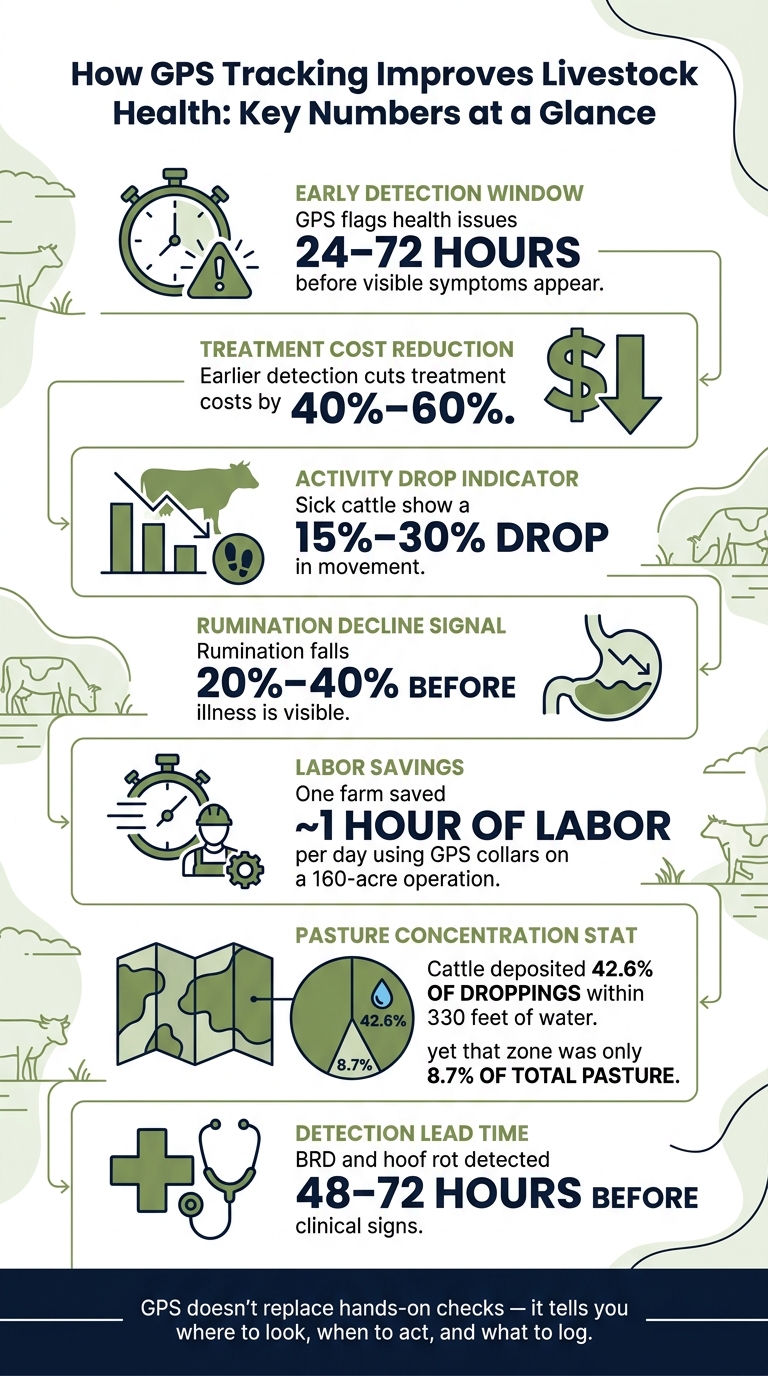
GPS tracking helps me spot herd health problems earlier by showing movement changes, isolation, grazing shifts, and long still periods before a cow looks sick. In many cases, these systems can flag trouble 24 to 72 hours before clear clinical signs, which can lower treatment costs by 40% to 60% and help me check the right animal sooner.
Here’s the short version:
- Movement drops can point to illness, hoof issues, or stress.
- Isolation from the herd can signal calving or sickness.
- Long stationary periods can mean injury or foot problems.
- Changes around water, shade, and grazing areas can show heat stress, lameness, or pasture access issues or GPS field mapping errors.
- GPS records also help me track inspections, treatments, and follow-up in one place.
- Compared with manual checks alone, GPS gives me better visibility between pasture visits and cuts wasted time driving around.
A few numbers stand out:
- Sick cattle may show a 15% to 30% drop in activity
- Rumination can fall 20% to 40% before illness is easy to see
- Earlier detection may happen 48 to 72 hours ahead of symptoms
- One farm using GPS collars saved about 1 hour of labor per day
- Cattle placed 42.6% of droppings within 330 feet of water, even though that area was only 8.7% of the pasture
If I had to sum it up in one line, it’s this: GPS does not replace hands-on herd checks, but it helps me know where to look, when to act, and what to log.
GPS Livestock Tracking: Key Health & Efficiency Stats
76 - Wearable IoT Devices for Livestock Health Monitoring | Smart Farming Technology 2025
Transform Your Agricultural Team
Streamline job management, field mapping, and machine tracking with HarvestYield. Simplify your operations and eliminate paper job sheets.
ContinueWhat GPS tracking reveals to support faster health decisions
GPS data turns early warning signs into patterns you can track. And the signals that matter most often shift before you can spot a clear symptom with the naked eye.
Movement drops, isolation, and long stationary periods
Long periods of stillness are a clear red flag. In one 2026 field trial, a steep drop in movement led to a check that found early hoof rot days before a routine inspection would likely have caught it. That’s where GPS earns its keep: it turns a small change in movement into a reason to act.
Separation from the herd is more than a location update. It can point to a health issue. When a cow breaks away and stays apart, it may signal calving or illness. GPS proximity data tracks those social shifts on its own, which means a manager doesn’t have to be out in the field at the exact right moment to catch them.
The same location data can also show where stress begins to change daily movement and feeding behavior.
Grazing patterns, water access, and heat or stress behavior
GPS records show which parts of a pasture cattle use most and which areas they avoid. One study found that cattle deposited 42.6% of droppings in areas within 330 feet of water troughs, even though those zones made up just 8.7% of the total pasture. That kind of uneven use puts heavy pressure on small sections while forage in other parts of the field goes untouched.
Changes around water and shade can also point to trouble. Fewer trips to water or crowding in shaded spots may signal heat stress or water access problems.
A cow that cuts down her daily travel range or starts avoiding areas she normally uses may be showing early lameness. The same kind of shift can also point to heat stress or pasture access issues before they turn into bigger problems.
Those alerts give teams a clear cue on when to inspect, isolate, or treat an animal.
How GPS tracking helps address the biggest herd health problems
Earlier intervention when behavior changes appear
Once a GPS alert flags a problem, speed matters. The main upside here is earlier action. GPS and multi-sensor tags can spot issues like bovine respiratory disease (BRD) or hoof rot 48 to 72 hours before clinical symptoms show up.
That kind of head start can change the whole outcome. Detecting illness 48 to 72 hours earlier can cut treatment costs by 40% to 60% and reduce mortality rates. For many producers, a simple way to begin is to tag bulls or lead cows first.
Better pasture rotation and more even forage use
Location data does more than help find sick animals. It also shows how cattle move across the pasture day after day. When you can see which paddocks are getting hammered and which ones cattle barely use, rotation calls get a lot easier to make.
On a 160-acre Illinois farm, 25 GPS collars helped move cattle into fresh half-acre paddocks each day. The result: about one hour of labor saved per day and better forage use.
That time savings matters for herd health too. If the system handles more of the tracking, your crew or contractors can spend more time actually watching cattle instead of driving around trying to locate them.
Manual checks vs. GPS-based monitoring
This gap shows up most on farms where staff can't lay eyes on every pasture every day. Manual observation is still the backbone of herd management. But as an operation grows, it starts to hit a wall.
GPS-based monitoring doesn't replace people. It fills the space between physical checks and helps teams spot sick animals sooner than visual observation alone.
| Factor | Manual observation | GPS-based monitoring |
|---|---|---|
| Speed of detection | Often delayed until the next physical check | Faster visibility between checks |
| Labor demand | Higher; requires frequent travel and visual inspection | Lower; automated alerts and remote location checks |
| Recordkeeping | Relies on memory and handwritten notes | Centralized movement and location records |
| Coverage | Limited by staff time and field access | Broader oversight across multiple groups or pastures |
Using GPS records to improve team coordination and follow-up
Recording field activity and herd-related work in one place
Once GPS flags a problem, the next step is making sure the right person finds the field entrance and checks it fast. Shared GPS logs make that a lot easier.
The key is to keep the inspection, treatment, and next step in the same record. That way, people aren't chasing updates across texts, notebooks, or separate apps. HarvestYield records GPS-linked jobs, field findings, and follow-up tasks in one place - keeping inspections, treatments, and follow-up tasks visible across managers and workers so nothing is missed.
Building a repeatable process for monitoring and response
This kind of follow-up works best when the team uses the same routine every time. A daily GPS review helps people move faster after an alert.
Each morning, review GPS alerts and put isolated or stationary animals at the top of the list for physical inspection. As soon as the animal is checked, log the finding and any treatment. If another visit is needed, assign it to one person with one due date.
That simple flow helps teams catch patterns and act sooner. It also makes it easier to deal with cases where long stationary periods may point to illness or injury, such as foot rot, that needs treatment.
The process should stay simple: review, inspect, log, assign.
Conclusion: GPS tracking gives farms earlier warning and better herd control
Taken together, GPS tracking gives farm managers earlier warning and better control over herd health. It helps teams spot trouble in movement, grazing, and location before problems become obvious. That steady view of animal behavior makes it easier to act faster and with more precision.
GPS tracking doesn't replace stockmanship. It makes good stockmanship sharper.
FAQs
How accurate is GPS for finding a sick cow?
GPS works very well for finding a cow. In most cases, accuracy falls between 2 and 11 meters, depending on the sensor being used.
What GPS doesn't do is diagnose illness on its own.
What it can do is point you to animals that may need a closer look. For example, GPS can flag behavior that seems off, like:
- staying still for too long
- leaving virtual geofenced boundaries
- separating from the herd
That kind of movement data gives farmers an early heads-up, not a medical answer. For a better read on animal health, GPS is often used alongside other sensors.
Do I need to tag every animal to see health benefits?
It comes down to your management goals.
Some systems track each animal on its own, including health, movement, and disease risk. Others use tagging in a more limited way.
For example, some producers tag only mature cows because calves usually stay close to their mothers. Your best setup depends on the size of your operation and what you need to monitor. In many cases, individual tracking gives you better health and behavior data than location tracking alone.
What should I do after a GPS health alert?
When you receive a GPS health alert, go find the animal and check it in person right away. These alerts can point to illness, injury, lameness, or isolation before those problems are easy to spot with the naked eye.
A fast response gives you a better shot at confirming early issues like hoof rot or respiratory disease, so treatment can start at once. HarvestYield can also help you log what you find and keep track of herd health with less hassle.